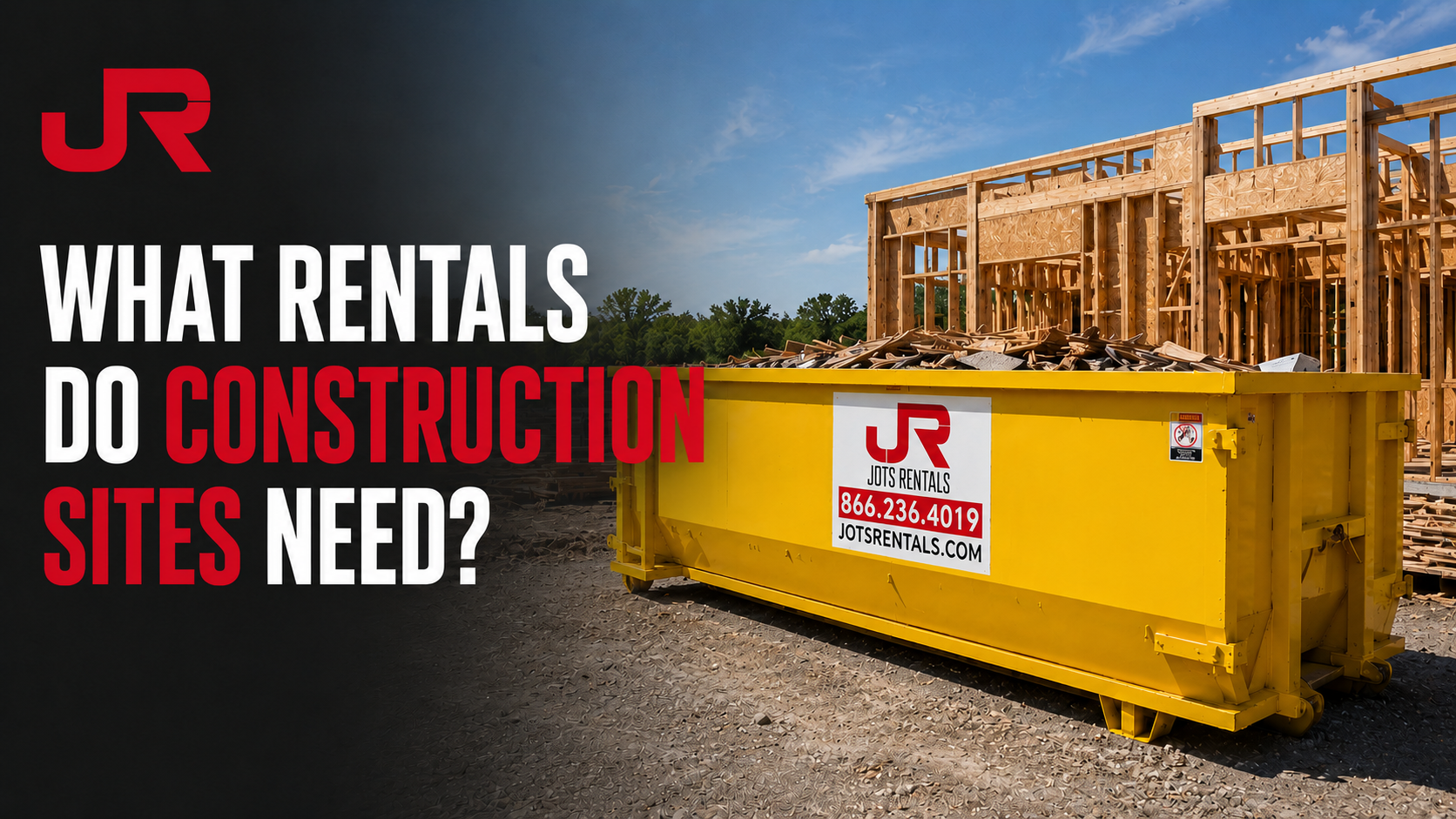
Construction sites require careful planning and organization to operate efficiently. The right rentals improve project productivity and site cleanliness. This guide explains essential rentals (roll-off dumpsters, portable restrooms, and jobsite sanitation) and how they address common waste and hygiene challenges. By understanding rental types and functions, you can make informed choices that streamline operations. The guide covers dumpster sizes, portable restroom types, sanitation options, and associated costs.
Comprehensive Guide on Essential Rentals for Construction Sites
Sites need rental equipment to match project scale. Roll-off dumpsters and portable restrooms are central to maintaining cleanliness and order. Knowing available rental types, their uses, and how they affect efficiency is important. Proper sanitation and waste management support worker safety and productivity.
Roll-Off Dumpsters
Roll-off dumpsters are essential for handling debris generated during construction. Multiple sizes accommodate different project needs and help contractors select the appropriate container.
Ideal Dumpster Sizes and Common Capacities:
Dumpsters come in several sizes to match project scale and debris volume. Understanding capacities helps you choose the right option.
10-Yard Dumpster:
Approximately 10 ft × 8 ft × 4 ft, holding about 3–5 pickup-truck loads (≈4,000–6,000 lbs). Suited to small renovation projects or clean-outs.
20-Yard Dumpster:
Approximately 20 ft × 8 ft × 4.5 ft, with a capacity of about 4,000–6,000 lbs. Appropriate for medium-sized projects such as home additions and larger renovations.
30-Yard Dumpster:
Approximately 22 ft × 8 ft × 6 ft, holding about 7,000–10,000 lbs. Suitable for larger construction projects, major renovations, or commercial builds.
40-Yard Dumpster:
Approximately 23 ft × 8 ft × 8 ft, with a capacity near 10,000–12,000 lbs. Best for extensive demolition projects or large-scale renovations.
Choosing the Right Size Based on Project Scale:
Select the appropriate dumpster by assessing the expected debris volume, material types, and project duration. Job scope, timeline, and budget also influence the optimal size.
For contractors in East Texas, JOTS Rentals offers a range of roll-off dumpster sizes to meet different project requirements and optimize waste management.
Compare rental providers such as JOTS Rentals to secure competitive pricing while maintaining reliable service and timely pickups.
Portable Restrooms
Portable restrooms are essential to maintain sanitation on construction sites by providing workers with accessible facilities and improving hygiene standards.
Best Portable Restroom Options for Sanitation Needs:
Choose units based on the site’s sanitation requirements. The standard portable restrooms include basic toilet facilities, hand sanitizer, and waste containment; they are economical and suitable for short-term projects.
Deluxe Flushable Restrooms:
Deluxe flushable units feature flushing toilets and handwashing stations, offering greater comfort for longer projects or larger crews. See the deluxe flushable restrooms for upgraded amenities.
Restroom Trailers:
Restroom trailers provide a higher level of comfort for long-duration or high-end projects. They typically include multiple stalls, sinks, and running water; explore available restroom trailers.
Types of Available Portable Restrooms:
Portable restrooms range from basic to high-end units and should be selected based on project scale and crew size. Options include wheelchair-accessible units for inclusive sites.
Job Site Sanitation Solutions
Effective site sanitation reduces health risks and supports consistent productivity. Appropriate facilities contribute to a safer, more professional work environment.
Factors to Consider When Selecting Portable Restrooms:
Consider crew size, project duration, terrain, and site accessibility to ensure sanitation needs are met effectively.
General Guidelines for Restroom Units:
Provide a sufficient number of units for the workforce. As a baseline, plan for one unit per ten workers and adjust based on project length and conditions.
Guideline | Recommendation | Notes |
Number of Workers | 1 restroom per 10 workers | Minimum for effective sanitation |
Duration | Increase units for longer projects | More units for extended projects |
Implementing jobsite sanitation solutions improves worker morale and productivity while maintaining health and hygiene standards on construction sites.
What Are the Common Roll-Off Dumpster Capacities for Jobsite Waste?
Common roll-off capacities accommodate different waste volumes: smaller units suit renovation work, while extensive construction requires larger dumpsters.
How to Choose the Right Dumpster Size Based on Project Scale?
Choose by estimating debris volume and material types; use those estimates to select the appropriate dumpster size for your project.
What Portable Restroom Rentals Best Serve Construction Site Sanitation Needs?
Assess crew size and project duration to determine the best restroom rentals. Providers such as JOTS Rentals offer options to meet varying sanitation needs and budgets.
What Types of Portable Restrooms Are Available for Jobsite Hygiene?
Sites can choose from standard units, deluxe flushable options, and restroom trailers, each suited to different project scales and crew sizes.
How Do Rental Costs Vary Among Standard, Deluxe, and Accessible Units?
Costs vary according to unit features and services. Plan and budget for the level of comfort and amenities required to support your crew and schedule.
What Are the Benefits and Uses of Restroom Trailers on Construction Projects?
Restroom trailers provide enhanced comfort and sanitation, improving the workforce experience on long-term or high-end projects.
How Do Restroom Trailers Improve Comfort and Compliance on Jobsites?
Restroom trailers increase comfort, help meet health-code requirements, and promote worker satisfaction.
What Considerations Affect Restroom Trailer Rental and Placement?
Evaluate worker traffic, site restrictions, and proximity to work areas to determine optimal trailer placement for accessibility and convenience.
How Do Holding Tanks Support Construction Site Waste Management?
Holding tanks store wastewater where plumbing is not available, holding waste until it can be properly disposed of.
What Types of Holding Tanks Are Used for Jobsite Sanitation?
Holding tanks are available in different sizes and capacities to match site wastewater requirements and operational needs.
When Are Holding Tanks Required Versus Portable Restroom Options?
Choose holding tanks based on site plumbing availability and anticipated wastewater volume to ensure compliance with sanitation requirements.
What Are the Key Delivery, Placement, and Rental Timing Guidelines for Construction Site Rentals?
Schedule deliveries and placements to align with project milestones. Proper timing prevents delays and keeps operations on track.
How to Schedule Dumpster and Restroom Delivery for Efficient Jobsite Operations?
Plan deliveries according to project phases and expected site occupancy to maintain efficient operations.
What Are Best Practices for Delivery, Setup, and Pickup on Construction Sites?
Follow established best practices for delivery, setup, and pickup so rentals integrate smoothly into construction workflows.
Which Waste Materials Are Accepted in Construction Dumpster Rentals?
Confirm accepted materials with your rental provider to ensure compliance and efficient waste handling.
What Materials Are Prohibited in Roll-Off Dumpsters?
Avoid prohibited items, such as hazardous waste, or arrange proper disposal methods to comply with regulations.
How Do Regulations Affect Waste Disposal on East Texas Construction Sites?
Adhere to local East Texas regulations to ensure waste management meets legal standards and to avoid potential penalties.
Frequently Asked Questions
1. What factors should I consider when choosing a rental company for construction site rentals?
Assess the company’s reputation, range of rental options, and customer service. Review feedback for reliability, confirm availability of required dumpster sizes and restroom units, and check services such as delivery and pickup. Compare pricing and long-term rental discounts, verify regulatory compliance, and confirm maintenance schedules to keep facilities operational.
2. How can I ensure that my construction site remains compliant with health and safety regulations?
Provide adequate sanitation facilities, inspect them regularly for cleanliness and function, and understand local waste and sanitation regulations. Train workers on hygiene practices and the use of designated facilities to reduce health risks and support site safety.
3. Are there specific guidelines for the number of portable restrooms needed on a construction site?
Yes. A common guideline is one restroom per ten workers, adjusted for project duration and workforce needs. For longer projects, increase the number of units. Work with your rental provider to meet specific requirements.
4. What are holding tanks, and when should they be used on construction sites?
Holding tanks collect and store wastewater from portable restrooms where sewer connections are not available. Use appropriately sized tanks, monitor capacity, and schedule regular emptying to prevent overflow and maintain site hygiene.
5. How do I properly manage waste disposal on construction sites?
Develop a waste management plan that categorizes materials and specifies disposal methods. Use designated roll-off dumpsters, separate recyclables and hazardous waste, schedule regular pickups, and train staff on disposal protocols to maintain efficiency and compliance.
6. What are the benefits of using restroom trailers instead of standard portable toilets?
Restroom trailers offer greater comfort with features like multiple stalls, running water, sinks, and climate control. They improve morale and productivity and are well-suited for larger crews and extended projects.
7. How can I determine the right size dumpster for my construction project?
Estimate the expected debris volume, consider material types and project timeline, and select a dumpster accordingly. Choosing one size larger than your estimate can prevent overflow. Consult rental providers for recommendations tailored to your project.