Short answer: yes — you can use a dumpster in freezing weather if you plan ahead. Winter adds challenges for temporary waste containers, but with the right site prep, moisture control, and safety steps you can keep pickups on schedule and avoid extra costs. This guide walks through solid, practical actions: how to ready your site, protect materials with tarps and drainage, use de-icing and PPE safely, and solve common cold-weather problems. We emphasize preventing frozen waste, avoiding weight overages, and keeping pickups reliable. Along the way we share how JOTS Rentals — serving Northeast Texas and Northwest Louisiana with roll-off dumpsters and portable restrooms — helps customers stay productive and safe in winter conditions. Read on for step-by-step checklists, clear comparisons of placement and protection options, and straightforward how-to tactics for cold-weather projects.
How Do You Prepare Your Site for Dumpster Rental in Freezing Weather?
Preparing your site means picking a solid spot, making sure trucks can get in and out safely, and telling your rental company about site conditions. Good prep cuts the risk of the dumpster settling in thawed ground, keeps snow from piling against the walls, and reduces the chance of pickup delays from blocked access. Start by checking surface type, sun and wind exposure, and any low spots where water pools. Then decide whether you need ground reinforcement or a different placement. These choices affect driver access, crew safety, and whether contents are likely to freeze — so make them well before delivery day.
Before the table below, follow these basic prep steps most sites need for safe winter dumpster rental:
- Shovel loose snow and ice from the intended placement area so you can confirm level ground.
- Prefer paved or compacted surfaces; add boards or gravel if the ground is soft.
- Keep an access corridor at least 12 feet wide so delivery trucks have room to work.
Those steps help drivers and crews stay safe and reduce the chance the dumpster will sink or tip as temperatures fluctuate. Next, compare common placement options so you can pick the best fit for your site.
Different placement choices bring different stability levels and prep needs in freezing conditions.
Placement Option | Stability on Frozen Ground | Prep Steps |
Paved driveway | High stability; minimal sinking | Clear snow, check for ice patches, mark boundaries |
Compacted gravel | Good stability if tightly compacted | Add extra gravel, tamp down, place plywood if soft |
Lawn or soft ground | Low stability; risk of sinking | Lay thick boards or use a gravel pad before delivery |
This table shows how surface choice affects delivery and siting for a winter job. The next section covers best placement tactics to avoid frozen ground and drifting snow.
What Is the Optimal Dumpster Placement to Avoid Frozen Ground and Snowdrifts?
Pick a paved, level spot or tightly compacted gravel so the dumpster’s weight spreads evenly and won’t sink during freeze–thaw cycles. South- or sun-facing locations shed snow faster and cut down on ice buildup. Avoid low spots where water can collect and freeze under the unit. If you can’t use pavement, put down a sturdy plywood or timber pad to spread the load, or add extra gravel or temporary mats for longer rentals. Position the unit so prevailing winds don’t push snow against one side, and mark the area clearly so drivers can place the dumpster quickly in snowy conditions.
These placement choices reduce settling and heavy snow buildup, which makes keeping access paths clear for safe delivery and pickup much easier.
How Should You Clear Access Paths for Safe Delivery and Pickup?
Leave a corridor wide and long enough for delivery trucks to approach, turn, and leave safely — typically at least 12 feet wide and a straight run of 30–40 feet for most roll-off trucks. Remove packed snow with shovels, snow blowers, or plows, and use traction materials on glazed ice where you don’t want to apply chemical de-icers. On gravel or dirt drives use sand or grit to avoid muddy conditions when things thaw. Tell the rental provider about any tight turns, low clearances, or utility obstacles ahead of time so drivers can plan routes and avoid delays.
Keeping access paths clear helps prevent canceled service and ties directly into protecting the dumpster and its contents from the elements.
What Are the Best Practices to Protect Your Dumpster and Contents from Winter Elements?
Winter protection focuses on keeping snow and ice out, managing interior moisture, and controlling weight so you don’t face overage fees. Good protection prevents frozen clumps, keeps the site tidy, and makes pickups safer. Use heavy-duty tarps, separate or double-bag wet materials, and plan more frequent pickups if your project generates liquids or slurry. Those steps preserve usable volume and keep materials accessible for crews, avoiding problems like frozen lids and extra haul weight.
Three protection actions to prioritize for winter dumpster use:
- Secure a heavy-duty tarp over the dumpster to block snow and reduce water entry.
- Double-bag wet materials and drain liquid where possible before disposal.
- Schedule more frequent pickups during thaw cycles or wet-weather work to limit accumulation.
These basics prepare you to choose specific protection methods for your site and materials.
Protection Method | Best Use Case | Key Advantage |
Heavy-duty tarping | Open-top roll-off during snow events | Prevents snow load and moisture ingress |
Double-bagging wet waste | Projects with organic or saturated debris | Contains moisture and reduces frozen clumps |
De-icing + drainage | Preventing lid freeze and standing water | Improves access and reduces ice bonding |
Use this table to match protection tactics to your project’s materials and exposure. Next up: why tarping matters in winter.
Why Is Tarping Your Dumpster Crucial in Cold Weather?
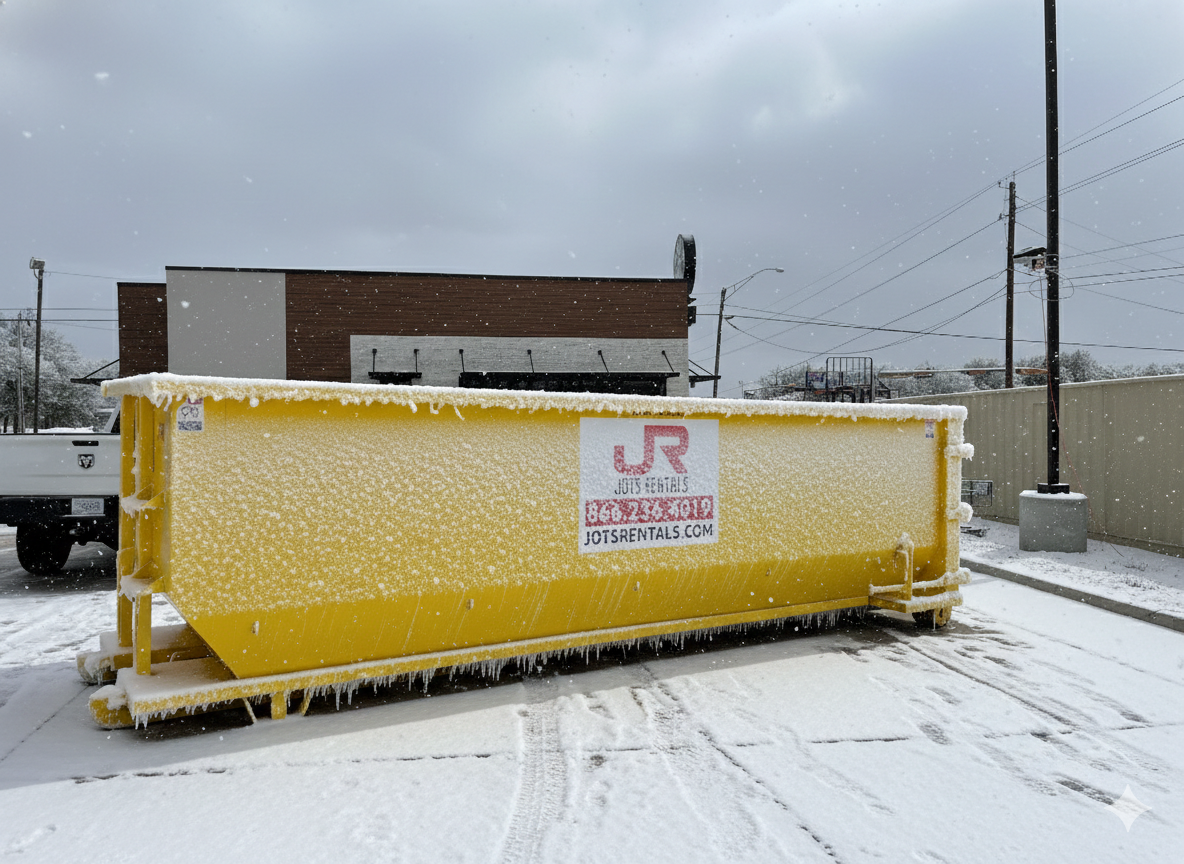
Tarping keeps snow and sleet out of open-top roll-offs, reducing added weight from ice and preventing interior materials from freezing into dense blocks. Use commercial-grade, weather-resistant tarps with reinforced grommets and secure them with ratchet straps or heavy-duty bungees that hold up to wind. Tension tarps so water drains away from the container, and check fasteners after storms. Keeping snow out preserves capacity, lowers transport weight, and cuts down on the need for on-site thawing before pickup.
A reliable tarping routine also supports wet-waste handling and helps avoid frozen loads that slow pickups.
How Can You Manage Wet Waste to Prevent Freezing Inside the Dumpster?
Limit free liquids from entering the dumpster — drain washout water, put liquids in sealed containers, or keep highly saturated material separate for special handling. Double-bag heavy wet items like sod or wet drywall to keep moisture contained and stop piles from freezing into solid blocks. On jobs with washout or slurry, use smaller dumpsters or schedule more frequent pickups so material doesn’t freeze into one large mass. These practices make removal easier and reduce the chance of unexpected weight fees at pickup.
Managing wet waste well also lowers the risk of frozen lids and the need for emergency thawing before service.
How Can You Ensure Safety When Using a Dumpster in Freezing Conditions?
Safety in freezing weather focuses on preventing slips and falls, protecting equipment, and giving crews clear procedures for handling cold metal. De-ice access areas, provide traction where needed, and require proper PPE to reduce injuries for delivery crews and site staff. Tell your rental provider about site conditions so drivers can assess the approach and decide if extra precautions — like driver-only pickups or alternate placement — are needed. Prioritizing these steps keeps service safe and on time.
- Inspect and mark hazardous zones: Flag icy patches and hidden obstacles before crews arrive.
- Provide traction materials: Keep sand or traction agents handy around the dumpster and along access paths.
- Enforce PPE use: Require insulated gloves, slip-resistant boots, and high-visibility outerwear during loading and servicing.
These measures cut incidents and support safe operations in freezing weather. The next sections give de-icing tips and recommended gear.
What Are Effective De-icing Methods Around the Dumpster?
Pick a de-icing approach that balances safety, surface compatibility, and environmental impact. On paved surfaces, calcium chloride works at lower temperatures and melts ice faster than rock salt. Rock salt is cheaper for moderate freezes but can corrode metal over time. For gravel or dirt drives, avoid salts that create mud when things thaw — use sand or grit for instant traction without chemical side effects. Apply de-icers before heavy freezes when possible and reapply after plowing or heavy use to keep corridors safe for delivery trucks.
Right timing and product choice improve crew safety and reduce surface damage, which ties back to using the right PPE.
What Personal Safety Gear Is Recommended for Cold Weather Dumpster Use?
For cold-weather dumpster work we recommend insulated, water-resistant gloves to protect hands from cold metal and wet materials, plus slip-resistant boots with aggressive tread for traction. High-visibility outerwear helps crews stay visible in short winter daylight, and layered clothing with moisture-wicking base layers helps workers regulate temperature during intermittent activity. Also plan warming breaks and a sheltered spot for crews to recover — that reduces cold stress and keeps productivity up during long service windows. Proper gear lowers injury risk and supports efficient pickups and deliveries in tough weather.
Good PPE also cuts the chance crews need emergency help or cause damage while accessing difficult placements. Next: common winter problems and how JOTS Rentals responds.
What Common Winter Dumpster Challenges Occur and How Does JOTS Rentals Address Them?
Typical winter issues include frozen lids and doors, extra weight from snow and ice that can trigger overage fees, and access problems that delay pickups in storms. Each problem has practical prevention steps and reactive protocols to keep projects on track and costs predictable. JOTS Rentals leans on local experience and dependable service, pairing roll-off dumpsters with portable restrooms when needed to support crews on winter sites. Clear communication about site conditions and contingency scheduling helps avoid surprises and lets crews plan around weather windows.
Issue | Effect | Typical Response |
Frozen lids | Inaccessible contents, delayed pickup | Use safe de-icers, warm-water controlled thawing, hinge lubrication |
Snow/ice weight | Potential overage charges | Tarp mitigation, pre-pickup snow clearing, more frequent pickups |
Hazardous access | Delayed or canceled service | Advance communication, driver assessment, contingency scheduling |
This problem-to-response view shows how straightforward operational choices reduce downtime and surprise charges. The following sections offer hands-on techniques for frozen lids, fee avoidance, and how our teams coordinate pickups in bad weather.
How Do You Handle Frozen Lids and Doors on Dumpsters?
Start with gentle mechanical methods: tap hinges and try lifting with steady pressure — never force it, which can damage seals. If that doesn’t work, use a commercial de-icer or pour a controlled amount of warm (not boiling) water around seals, then dry and lubricate hinges with a silicone lubricant to stop re-freezing. Don’t use open flames or heat guns — they can warp metal and ruin seals. If you need help, call your rental provider for trained personnel. Preventatively, keep lids covered with a tarp and apply anti-ice lubricant before storms to reduce sticking.
These safe unfreeze steps cut service delays and protect container hardware. Next: avoiding overage fees from snow and ice weight.
How Can You Avoid Overage Fees from Snow and Ice Weight?
Snow and ice add measurable weight to roll-off dumpsters and can trigger overage charges. Prevent that by tarping dumpsters to limit accumulation, clearing snow off the unit before pickup, and informing your rental provider about load conditions before service. If your project produces heavy, wet debris in winter, consider a smaller dumpster with more frequent pickups so material doesn’t freeze into a dense mass. Proactive scheduling and site clearing keep loads within contracted limits and make disposal costs predictable.
Reducing added weight with these tactics minimizes surprise charges and shows why quick coordination with your rental provider matters during bad weather.
How Does JOTS Rentals Ensure Timely Dumpster Pickup During Inclement Weather?
We manage winter pickups with advance communication, flexible dispatching, and driver safety protocols that balance schedules with on-site hazards. Our local knowledge across Northeast Texas and Northwest Louisiana helps us anticipate weather patterns and suggest better delivery windows or alternate placements when storms are expected. If access is unsafe, drivers coordinate with customers for remediation steps or reschedule with clear contingency plans to avoid unsafe retrievals. This dependable, professional approach — alongside combined services like portable restrooms and roll-off dumpsters — keeps crews supported and projects moving through winter conditions.
By combining local know-how with clear communication and contingency options, we reduce delays while putting safety first. The next section explains why a local provider matters for winter projects.
Why Choose JOTS Rentals for Winter Dumpster Rental Services in Northeast Texas and Northwest Louisiana?
Local providers matter in winter because regional experience cuts down on surprises — our drivers know Longview, Tyler, Mt. Pleasant, Whitewright, and Kemp and can plan around common freeze–thaw patterns and road conditions. JOTS Rentals pairs roll-off dumpsters with a range of portable restroom options (standard, deluxe flushable, special event, wheelchair accessible, and restroom trailers) to give comprehensive site support that keeps crews productive in cold weather. Our value is local expertise, dependable service, and flexible delivery and maintenance that follow winter safety practices. Bundling sanitation with waste containment simplifies logistics, keeps crews comfortable, and helps meet regulations.
- Local scheduling knowledge to avoid weather-related delays and pick the best delivery windows.
- Combined solutions that pair roll-off dumpsters with portable restroom rentals for crew support.
- Professional delivery and maintenance practices tuned to winter conditions for dependable service.
These local strengths help construction teams and event planners reduce weather disruption and keep schedules predictable. The sections that follow describe specific services and support for winter projects.
What Local Winter Waste Management Solutions Does JOTS Rentals Provide?
We offer roll-off dumpsters in sizes for most project scopes and coordinate portable restroom rentals to support crews working in cold conditions. Our regional experience in Northeast Texas and Northwest Louisiana enables faster responses and smarter scheduling during winter storms, with crews who understand neighborhood access constraints and common site challenges. Our customer support focuses on real-time coordination during adverse weather — advising on placement, access clearing, and tarping to limit snow buildup and weight problems. These services are designed to keep projects safe and on budget through freezing spells.
Local knowledge and bundled services remove logistical friction on winter jobs and extend into dedicated support for construction and event teams.
How Does JOTS Rentals Support Construction Companies and Event Planners in Winter?
For construction crews, we often recommend smaller dumpsters with more frequent rotations during wet or thawing conditions and pair those rentals with portable restrooms to keep crews comfortable and productive. For event planners, we advise placing dumpsters away from heavy foot-traffic, using secure tarping to protect site cleanliness, and coordinating service windows so events stay on schedule in cold weather. In both cases, our reliable delivery, setup, and maintenance reduce onsite coordination so organizers can focus on the job. Customers benefit from responsive local service and solutions that address winter-specific constraints.
These targeted supports show how combining sanitation and waste services simplifies winter logistics while keeping safety and reliability front of mind.
Frequently Asked Questions
1. Can I rent a dumpster for residential projects during winter?
Yes. You can rent a dumpster for residential jobs in winter — many companies, including JOTS Rentals, offer cold-weather service. Prepare your site by clearing snow and ice, confirming stable ground, and keeping access paths open for delivery and pickup. With proper preparation, residential waste disposal works fine in freezing conditions.
2. What should I do if my dumpster gets stuck in the snow?
Don’t try to move a stuck dumpster yourself — that can cause damage. Call your rental provider. They can send a crew to clear the area or use the right equipment to extract the unit safely. To prevent this, keep access paths clear of snow and ice.
3. How can I prevent my dumpster from tipping over in winter?
Place the dumpster on a stable, level surface like a paved driveway or tightly compacted gravel. Avoid low spots where water can pool and freeze. Use plywood or timber pads to spread the load and secure the unit with a heavy-duty tarp to reduce snow accumulation. Check site conditions regularly and adjust as needed.
4. What are the best materials to use for traction on icy surfaces?
Sand, grit, or kitty litter give immediate traction without harming the surface. Avoid rock salt on gravel or dirt drives because it can make muddy conditions when thawing occurs. For paved areas, calcium chloride works well at low temperatures but use it sparingly to limit metal corrosion.
5. How often should I schedule dumpster pickups during winter?
Schedule pickups more frequently in winter if your project produces wet waste or you expect snow accumulation. More frequent service prevents materials from freezing into a solid mass, which complicates removal and can increase fees. Talk with your rental provider to set a schedule that matches your project and local weather.
6. What should I do if my dumpster lid freezes shut?
Avoid forcing a frozen lid, which risks damaging hinges and seals. Gently tap around hinges to loosen ice. If that fails, use a commercial de-icer or pour warm (not boiling) water around the seals, then dry and lubricate hinges. If you need help, contact your rental provider for trained assistance.
7. Are there specific regulations for winter dumpster rentals?
There aren’t universal regulations specifically for winter dumpster rentals, but local ordinances may govern placement, access, and safety. Check with your rental provider and local authorities to ensure compliance. Following winter best practices — keeping access clear and securing loads — also helps avoid problems during your rental.