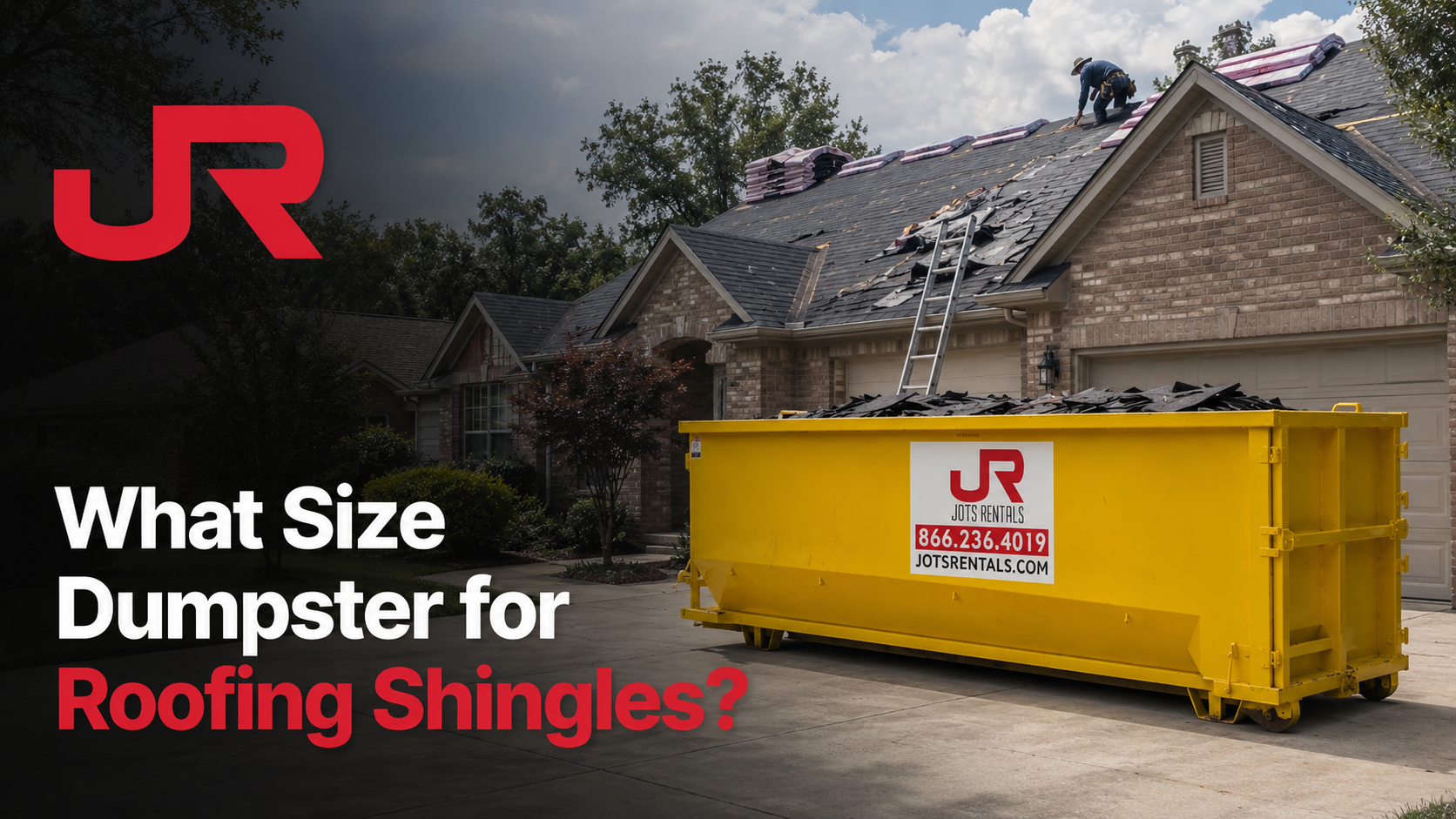
Selecting the correct dumpster size for roofing shingles is a key decision that affects project efficiency and debris handling. This guide explains the factors that determine dumpster size, describes available sizes and their associated weight limits, and outlines best practices for renting a dumpster in East Texas. It also explains how JOTS Rentals can support your roof replacement with reliable dumpster rental services tailored to your needs.
To choose the right size dumpster for roofing shingles, consider the following factors:
Several considerations influence both the efficiency and cost of your roofing project. Reviewing these factors will enable a well-informed selection of dumpster size.
Project Size
Project scale is the primary determinant of dumpster size. Larger commercial roofs generally require larger dumpsters than small residential jobs. For example, a small residential replacement may require only a 10-yard dumpster, while larger commercial projects may require a 30-yard unit. Accurately assessing project scale guides the correct choice.
Debris Volume and Weight
Estimate both volume and weight of roofing debris before ordering. Shingles are heavy, and the total weight influences the appropriate dumpster. A common rule of thumb is that one square (about 100 square feet) of shingles weighs roughly 200–250 pounds. Thus, replacing a 1,500-square-foot roof can produce approximately 3,000–3,750 pounds of debris. Use this estimate to match dumpster capacity and weight limits.
Weight Limits
Each dumpster size has a specified weight limit that must be observed to avoid overweight charges. For example, a 20-yard dumpster commonly has a limit of around 4 tons (8,000 pounds), while a 30-yard unit may allow up to 6 tons (12,000 pounds). Exceeding these limits can incur significant additional fees, so confirm limits before filling the container.
Expert Recommendations
Experts advise matching the dumpster size to both the roofing material and the total roof area. For many residential projects, a 20-yard dumpster is sufficient for an average roof. Larger homes or commercial buildings often require a 30-yard dumpster. Consulting with a rental provider yields recommendations tailored to your project specifics.
Tips for Selecting the Best Roll-Off Dumpster
Apply the following practical tips to simplify dumpster selection and avoid costly adjustments during the project.
- Assess Your Needs: Evaluate the size of your roofing project and the type of materials being disposed of.
- Consult with Professionals: Speak with dumpster rental providers to get recommendations based on your project specifics.
- Consider Rental Duration: Plan for how long you will need the dumpster, as this can affect pricing and availability.
Which Dumpster Sizes Are Suitable for Roofing Shingles Disposal?
Several dumpster sizes are commonly used for roofing debris; the most suitable options depend on project scale and debris volume.
- 10-Yard Dumpster: Ideal for small residential projects, such as minor repairs or single-layer roof replacements.
- 20-Yard Dumpster: Suitable for average-sized homes undergoing full roof replacements.
- 30-Yard Dumpster: Best for larger homes or commercial roofing projects that generate significant debris.
What Are Common Roll-Off Dumpster Sizes for Roofing Projects?
Understanding the dimensions and capacities of common dumpster sizes helps you select the appropriate unit for your project.
Dumpster Size | Dimensions (L x W x H) | Capacity (Cubic Yards) | Ideal Use |
10-Yard | 12′ x 8′ x 3.5′ | 10 | Small residential projects |
20-Yard | 22′ x 8′ x 4.5′ | 20 | Average-sized homes |
30-Yard | 22′ x 8′ x 6′ | 30 | Large homes or commercial projects |
The table summarises common dumpster sizes and their typical uses to help you choose the right container for your roofing project.
How to Determine the Best Dumpster Size for Roof Replacement Debris?
Begin by estimating the roof area and the type of shingles to be removed. Calculate expected debris weight and compare that figure to the weight limits of available dumpster sizes. When uncertain, select a larger dumpster to avoid the inconvenience and cost of adding a second unit.
What Are the Weight Limits and Material Restrictions for Roofing Dumpsters?
Weight limits and material restrictions are standard across most rental agreements. For example, a 20-yard dumpster typically carries a 4-ton (8,000-pound) limit. Certain items, including hazardous waste and large appliances, are generally prohibited. Confirm specific limits and restrictions with your rental provider before scheduling delivery.
What Are Roofing Dumpster Weight Limits and Why Do They Matter?
Adhering to weight limits prevents additional charges and reduces safety risks during transport. Overloading a dumpster can result in overweight fees, logistical complications, and potential hazards. Observing stated limits ensures a safe and predictable rental experience.
Which Roofing Debris Materials Are Acceptable or Prohibited?
Commonly accepted materials for roofing dumpsters include asphalt shingles, wooden roofing components, and metal roofing. Prohibited items often include hazardous waste, tires, and large appliances, which require specialized handling. Always verify which materials are acceptable with your rental company.
How Much Does Renting a Roofing Dumpster Cost in East Texas?
Rental costs in East Texas vary by dumpster size, rental duration, and local market conditions. On average, expect to pay between $300 and $500 for a standard rental period. This range typically covers delivery, pickup, and disposal fees, but confirm details with the provider.
What Factors Influence Dumpster Rental Costs for Roofing Shingles?
Key factors affecting rental cost include the dumpster size, rental duration, and location. Larger units and longer rental periods generally increase the price, and local demand or regulations can also affect rates.
How Does Rental Duration Affect Pricing for Roofing Dumpster Rentals?
Most companies offer a standard rental period of seven to ten days. Extended rental periods normally incur additional fees. Carefully planning the project timeline can reduce the risk of unexpected charges.
What Are the Delivery and Placement Considerations for Roofing Dumpsters?
Confirm there is sufficient space for the dumpster and that the delivery truck can access the site. Ensure the placement complies with any local regulations, as some jurisdictions restrict where dumpsters may be sited.
How Is Dumpster Delivery Managed for Roofing Projects in East Texas?
Rental companies typically coordinate delivery times and place the dumpster in an accessible location. Communicate any site-specific requirements or access constraints to the provider in advance to ensure proper placement.
What Are Best Practices for Dumpster Placement on Roofing Job Sites?
Follow these placement practices to maximize efficiency and safety on site.
- Choose a flat, stable surface: This prevents tipping and makes loading easier.
- Keep it accessible: Ensure that the dumpster is easily reachable for both workers and the delivery truck.
- Avoid blocking pathways: Place the dumpster in a location that does not obstruct movement around the job site.
How Do Portable Restroom Rentals Complement Roofing Dumpster Services?
Portable restrooms on-site improve worker comfort and productivity, supporting uninterrupted progress. JOTS Rentals provides a range of restroom options to complement dumpster services and maintain project efficiency.
Why Are Portable Restrooms Important for Roofing Job Site Sanitation?
Providing sanitary facilities protects worker health and helps ensure regulatory compliance. Portable restrooms support hygiene standards and reduce disruptions during project execution.
What Portable Restroom Options Does JOTS Rentals Offer for Roofing Projects?
JOTS Rentals supplies standard portable units, deluxe restroom trailers with additional amenities, and handwashing stations. These options address basic needs and enhanced comfort requirements on roofing sites.
These units ensure your roofing project has the necessary sanitation facilities and contribute to a productive work environment.
What Are the Local Regulations and Environmental Considerations for Roofing Dumpster Rentals?
Be aware of local regulations governing the disposal of roofing materials, particularly those related to hazardous waste. Familiarity with these rules helps avoid fines and supports responsible disposal practices.
What East Texas Roofing Waste Disposal Regulations Should Renters Know?
Renters in East Texas should understand restrictions on certain materials and required disposal methods. Consult your dumpster rental provider to clarify local regulations and ensure compliance.
How Are Roofing Shingles Recycled or Disposed Responsibly?
Responsible disposal often includes recycling programs that repurpose shingles into new products, reducing landfill use and supporting sustainable building practices. Choosing a rental service that offers recycling options can improve your project’s environmental performance.
Frequently Asked Questions
What should I do if I underestimate the dumpster size needed for my roofing project?
If you underestimate the required dumpster size, contact your rental provider promptly. They can often deliver a larger unit or provide a second dumpster. Additional fees may apply; it is advisable to overestimate slightly when selecting an initial size.
Can I place a dumpster on the street or sidewalk for my roofing project?
Placement on public streets or sidewalks may be permitted but usually requires a municipal permit. Regulations vary by location, so check with local authorities. If a permit is required, your rental company can often assist. Ensure the dumpster does not obstruct traffic or pedestrian routes to avoid fines.
How can I ensure that my roofing debris is disposed of in an environmentally friendly manner?
To promote environmentally friendly disposal, select a rental company that offers recycling for roofing materials such as asphalt shingles. You may also identify local recycling facilities that accept roofing waste. Responsible disposal reduces landfill contributions and supports sustainable practices.
What are the potential consequences of exceeding the weight limit of my dumpster?
Exceeding a dumpster’s weight limit can lead to overweight fees and materially increase rental costs. Overloading may also create safety hazards during transport and risk damage to the container. Accurately estimate debris weight and comply with stated limits to avoid these issues.
Are there specific materials I should avoid placing in a roofing dumpster?
Certain materials are commonly prohibited, including hazardous waste (such as chemicals and asbestos), large appliances, tires, and electronics. These items require specialized disposal methods. Consult your rental provider for a complete list of acceptable and prohibited materials to ensure compliance.
How can I prepare my site for dumpster delivery?
Prepare the site by providing adequate space on a flat, stable surface and clearing obstacles that could impede the delivery truck. Verify local placement regulations to avoid fines and communicate any special access requirements to your rental provider to ensure a smooth delivery.
What should I do if my roofing project takes longer than expected?
If the project extends beyond the planned timeline, notify your dumpster rental provider promptly. Most companies offer rental extensions, although additional fees may apply. Discussing project timing in advance helps minimize unexpected costs and ensures continued service.
d